
In the fast-paced world of digital marketing, data is king. But drowning in spreadsheets and spending hours manually compiling SEO reports is a surefire way to fall behind. You’re wasting precious time that your competitors are using to actually grow their business. Automated SEO reporting is the engine that turns raw data into effortless, actionable insights, freeing you up to focus on what truly matters: dominating your market.
What is Automated SEO Reporting?
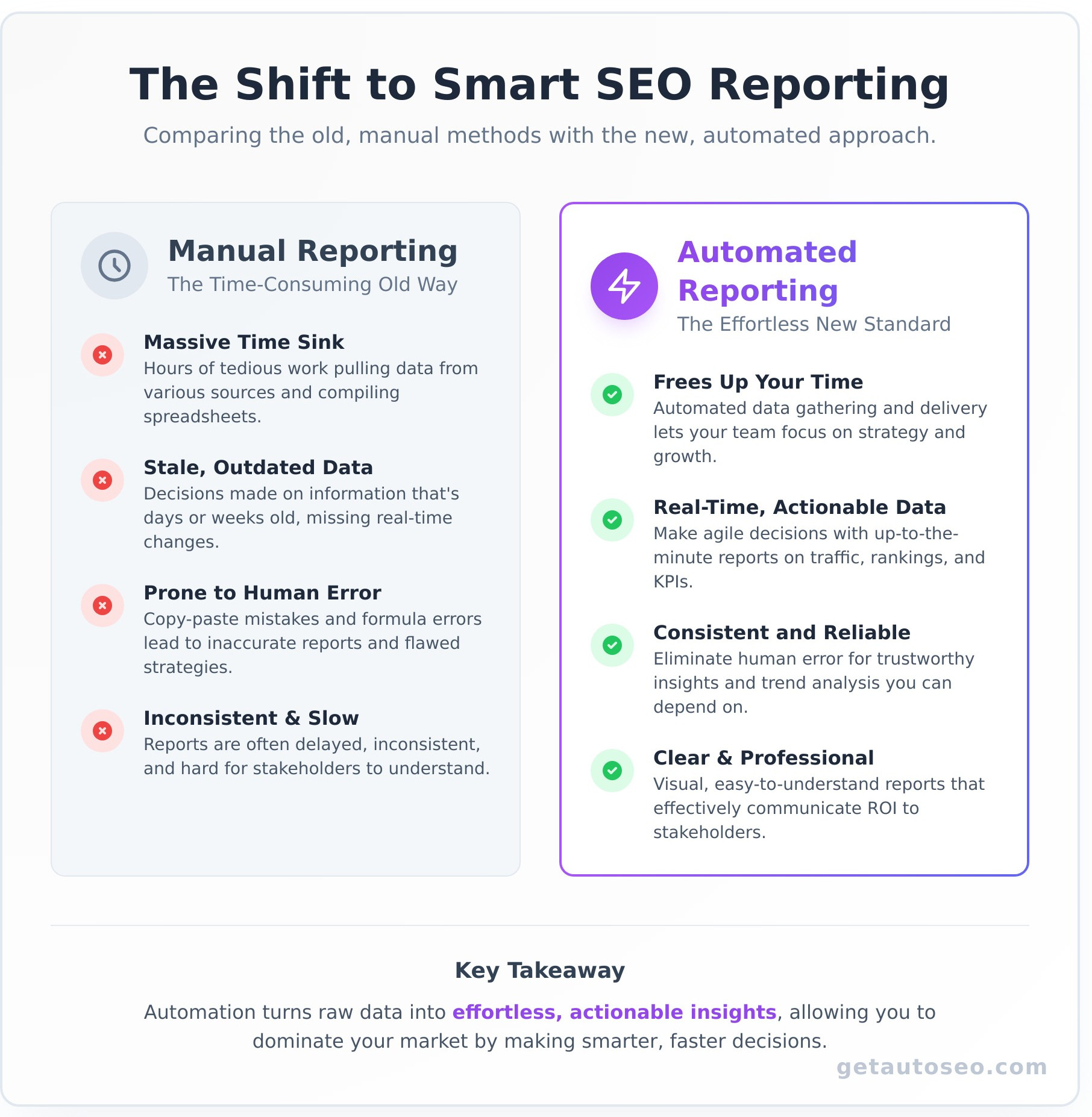
At its core, automated SEO reporting is the process of using software to automatically gather, compile, and deliver key SEO performance metrics. Unlike manual reporting, which involves painstakingly pulling data from various sources like Google Analytics and Search Console into a spreadsheet, automation does the heavy lifting for you. This isn’t just about saving a few hours; it’s about getting real-time data that allows you to make smarter, faster decisions to boost your online visibility.
Key Features of Automated SEO Reports
- Real-time data updates for accurate insights. Your reports are always current, reflecting the latest performance data without any delay. This means you can react to changes instantly, not weeks later.
- Automated delivery to your inbox. Set your schedule-daily, weekly, or monthly-and get crucial reports delivered directly to you and your team. No more reminders, no more missed deadlines.
- Customizable metrics for your specific needs. Focus only on the Key Performance Indicators (KPIs) that matter to your business goals, from organic traffic and keyword rankings to backlink growth and conversion rates.
Common Sources of Data for Automated Reports
- Integrating Google Analytics and Search Console. These are the foundational tools for any SEO strategy. Automation pulls essential data on traffic, user behavior, impressions, and click-through rates seamlessly.
- Utilizing third-party SEO tools for comprehensive insights. Platforms like Ahrefs or SEMrush provide deeper competitive analysis, backlink data, and rank tracking that can be integrated into a single, unified report.
- Benefits of pulling data from multiple sources. Combining data from various platforms gives you a complete 360-degree view of your SEO performance, eliminating blind spots and uncovering powerful new opportunities.
Benefits of Automated SEO Reporting
The primary advantage of automating your SEO reporting is a massive gain in efficiency. It eliminates tedious, repetitive tasks, freeing up your team to analyze results and strategize instead of just compiling data. This leads to more consistent, reliable insights that drive real growth and enhances collaboration by ensuring everyone is working from the same up-to-date information.
How Automation Improves SEO Strategy
- Quickly identify trends and issues. With data constantly updated, you can spot upward trends to capitalize on or downward trends to correct before they become major problems.
- Facilitates timely decision-making. Stop making decisions based on outdated information. Real-time reports empower you to be agile and responsive to the ever-changing search landscape.
- Supports better communication with stakeholders. Clean, professional, and easy-to-understand reports make it simple to demonstrate ROI and keep clients or upper management informed and impressed.
Real-World Examples of Impact
- Case studies showcasing improved performance. Businesses that switch to automated reporting consistently see an increase in their ability to track and improve keyword rankings and organic traffic because they can act on data faster.
- Testimonials from businesses using automated reporting. Small business owners and marketing managers frequently cite automated reports as a “game-changer,” allowing them to achieve agency-level insights without the agency-level price tag.
How to Choose the Right Automated SEO Reporting Tool
Selecting the right tool starts with a clear understanding of your business goals. Are you focused on local SEO, e-commerce, or content marketing? Your specific needs will determine the features you prioritize. Look for a tool that is powerful yet intuitive, and always consider whether a free or paid solution offers the best return on your investment.
Integration Capabilities
- Importance of compatibility with existing tools. Your chosen tool must seamlessly connect with the platforms you already use, especially Google Analytics, Search Console, and any other SEO software.
- APIs and data syncing features. Robust integration ensures that data flows smoothly and accurately between platforms, creating a single source of truth for your SEO performance.
User Experience and Support
- Ease of use for non-technical users. The best tools are designed for marketers, not developers. A clean interface and drag-and-drop report builder are essential for quick adoption.
- Customer support options and resources. When you have a question, you need a fast answer. Look for platforms that offer reliable customer support and helpful documentation to ensure you get the most out of your tool.
Creating Your Own Automated SEO Reports
Setting up your first automated report is straightforward with the right tool. The process typically involves connecting your data sources, selecting the KPIs you want to track, and designing a dashboard or template. The key is to start simple and focus on the metrics that directly impact your bottom line.
Sample Report Templates
- How to structure your report for clarity. A good report tells a story. Start with a high-level overview (like organic traffic), then drill down into specifics like top-performing pages, keyword movements, and technical SEO health.
- Visual elements to include for better engagement. Use charts and graphs to make complex data easy to digest. Visualizing trends in traffic, rankings, and conversions makes your report more impactful and easier to understand at a glance.
Ensuring Accuracy and Relevance
- Regularly updating your KPIs. As your business evolves, so should your reports. Periodically review your KPIs to ensure they are still aligned with your current marketing objectives.
- Adjusting reports based on changing business goals. Whether you’re launching a new product or entering a new market, your reports should be flexible enough to adapt and provide insights relevant to your new focus.
Frequently Asked Questions
What is the difference between automated and manual SEO reporting?
Automated reporting uses software to gather and compile data automatically, delivering reports on a set schedule. Manual reporting involves a person physically logging into different platforms, exporting data, and building reports in spreadsheets, which is time-consuming and prone to human error.
How often should I receive automated SEO reports?
This depends on your needs. A weekly report is often ideal for tracking progress and making tactical adjustments, while a monthly report is great for high-level strategic reviews with stakeholders or clients.
Can I customize my automated SEO reports?
Absolutely. Most quality tools allow you to fully customize your reports. You can choose which metrics to include, add your own branding, and create dashboards tailored to different audiences (e.g., one for your marketing team and another for your CEO).
What tools can I use for automated SEO reporting?
There are many tools available, from dedicated reporting software like DashThis to all-in-one SEO platforms. However, the most efficient solutions are often integrated services that handle not just reporting, but the entire SEO process on autopilot.
Is automated reporting suitable for small businesses?
Yes, it’s essential for small businesses. Automation levels the playing field, giving you access to powerful insights that were once only available to large companies with big marketing teams. It saves you your most valuable resource: time.
Stop wasting time in spreadsheets and start making data-driven decisions that grow your business. The longer you wait, the further ahead your competitors get. It’s time to put your reporting on autopilot and focus on what you do best. Start your $1 Trial of AutoSEO today and unlock powerful automated reporting!